
February 5, 2026
How to Pack a Kitchen Efficiently
Packing a kitchen efficiently is one of the most important steps when preparing for a move, as kitchens contain a high concentration of fragile, bulky, and irregularly shaped items. Dishes, glassware, cookware, appliances, utensils, and pantry goods all require different packing methods, and without a clear system, the process can quickly become overwhelming. A well-planned approach not only protects your belongings from damage but also saves time, reduces stress, and makes unpacking in your new home far easier and more organized.
The first and most essential step is decluttering and sorting your kitchen items. Going through cabinets, drawers, and pantries allows you to identify items that are rarely used, duplicated, expired, or broken. Deciding what to donate, sell, or discard significantly reduces the number of items you need to pack and transport. This step lowers the overall weight and volume of your move while ensuring that only useful and functional items make it to your new kitchen. Decluttering also helps you start fresh in your new space with an organized and intentional setup.
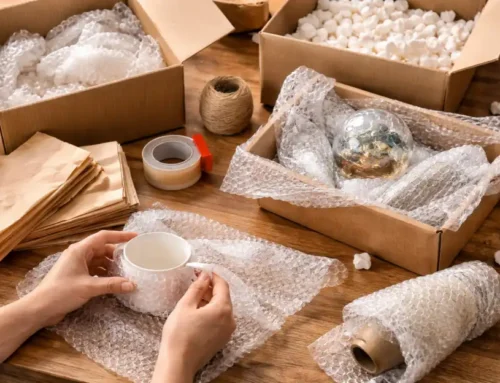
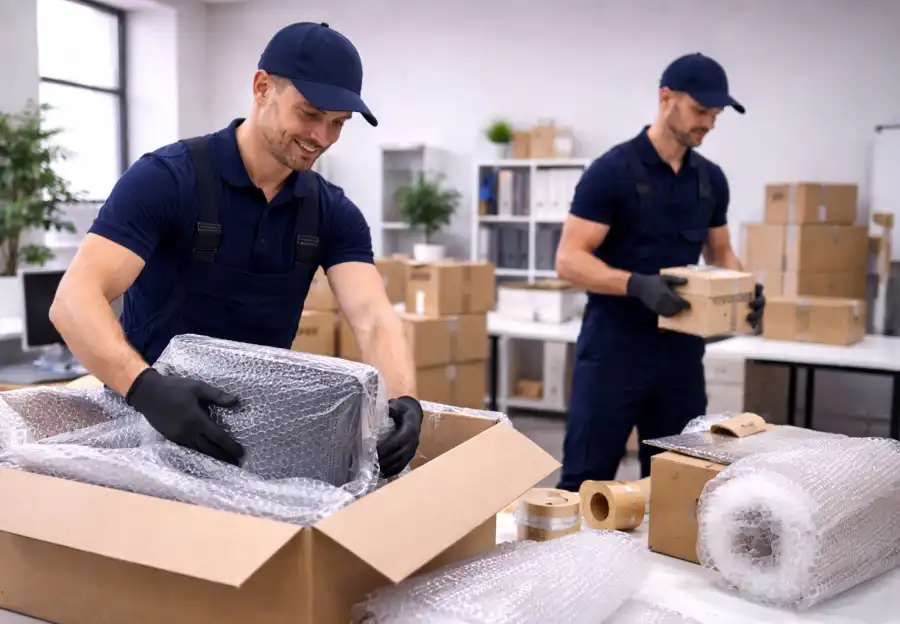
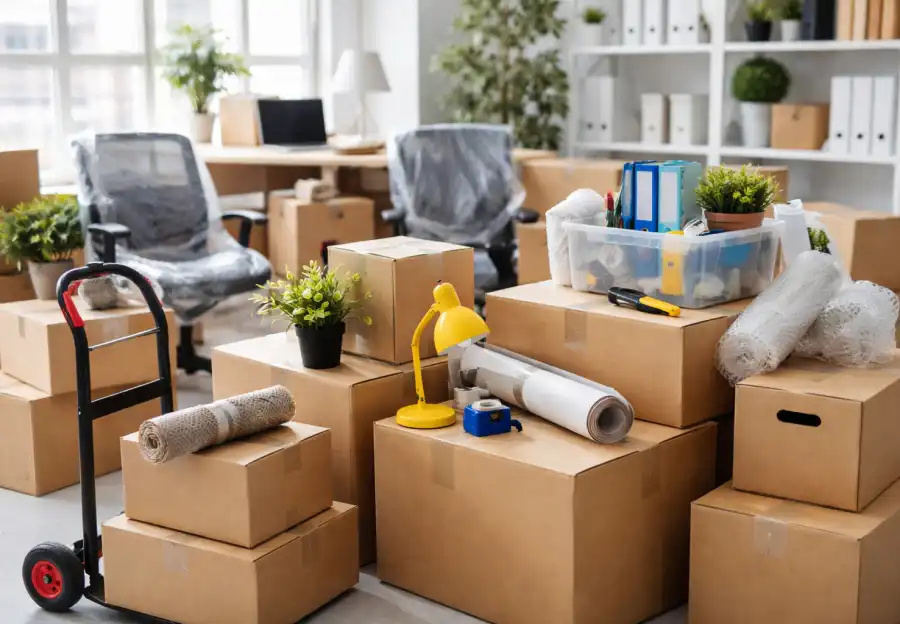
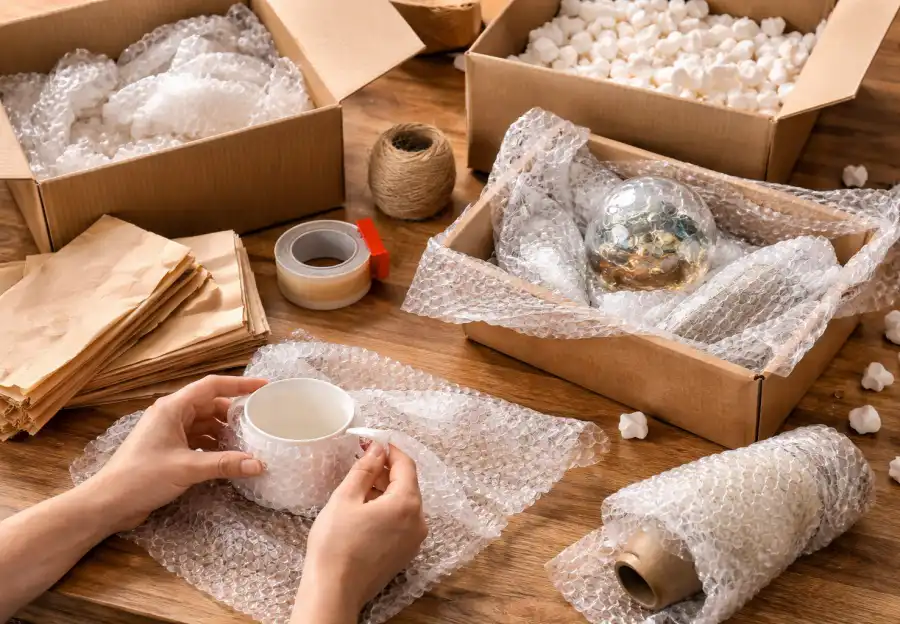
Once decluttering is complete, gathering the right packing materials is crucial. Kitchens require sturdy, reliable supplies to protect fragile items. Small to medium strong boxes are ideal for heavy items, while larger boxes should be reserved for lightweight goods. Packing paper, bubble wrap, foam sleeves, dish packs with dividers, and cardboard inserts help prevent breakage. Strong packing tape, permanent markers, and labels are equally important for sealing boxes securely and identifying contents clearly. Having all materials ready before you start prevents interruptions and ensures a smooth workflow.
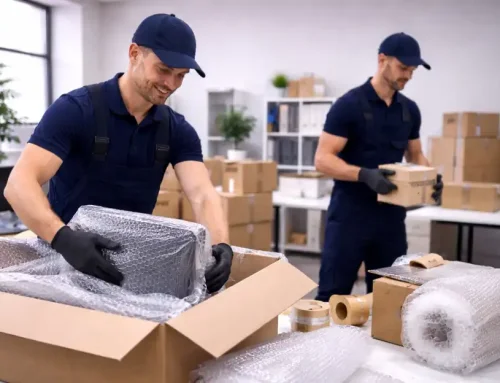
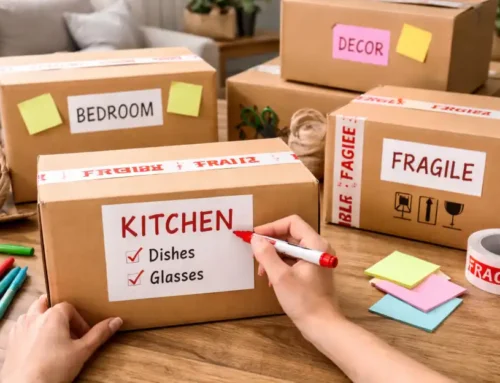
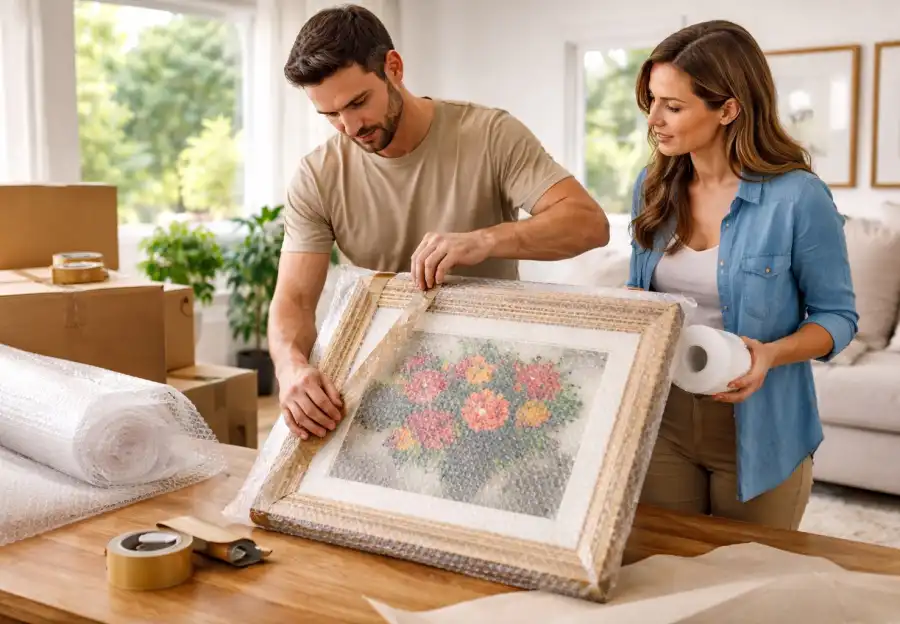
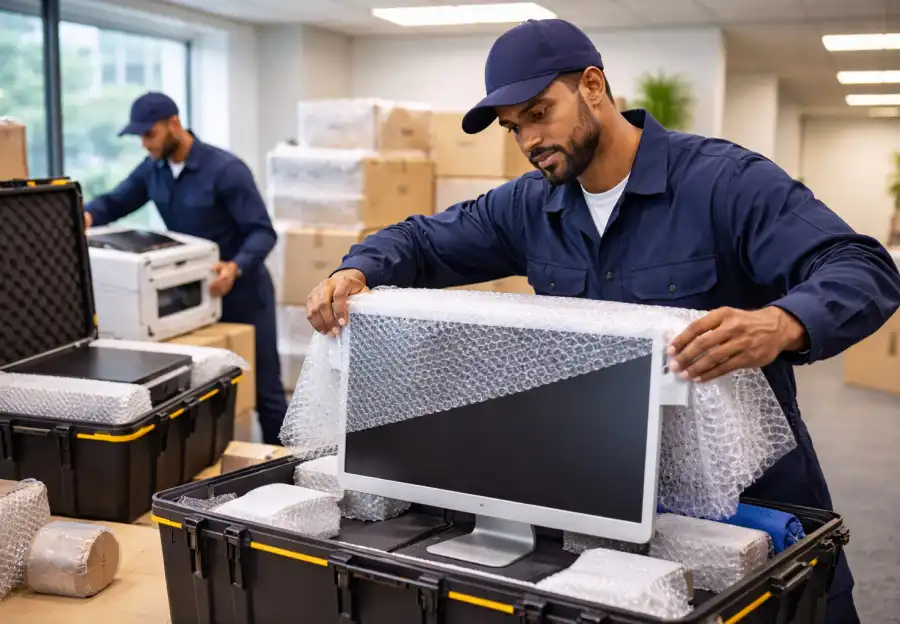
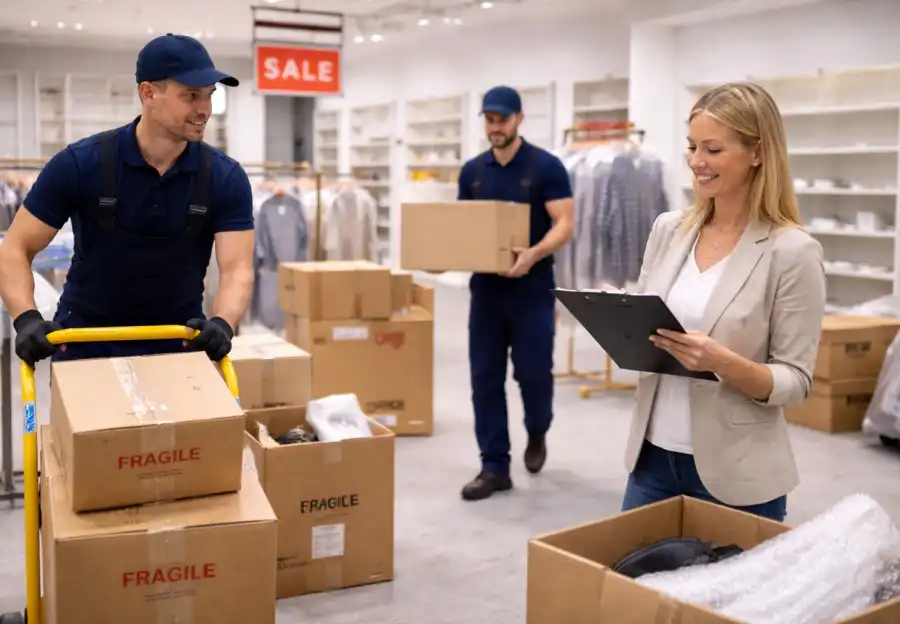
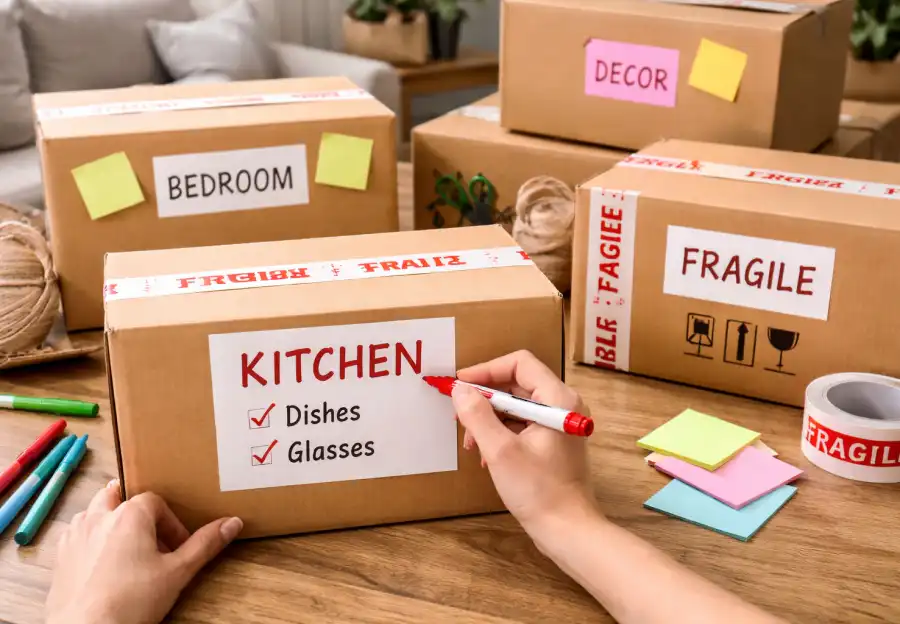
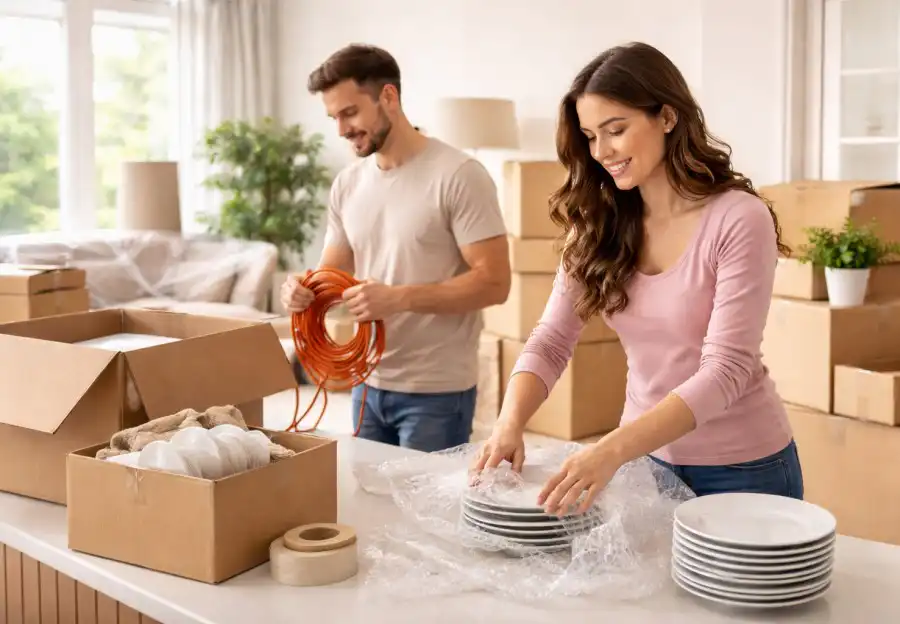
Packing should begin with fragile items such as dishes, glassware, and stemware, as these require the most care. Each item should be wrapped individually with packing paper or bubble wrap, with heavier items like plates placed at the bottom of boxes and lighter, delicate items on top. Dish packs with dividers are especially effective for glasses and cups, keeping them separated and stable. Clearly labeling boxes as “Fragile” and marking which side should face up alerts movers to handle them carefully. Room-specific or color-coded labels also help speed up unloading and unpacking.
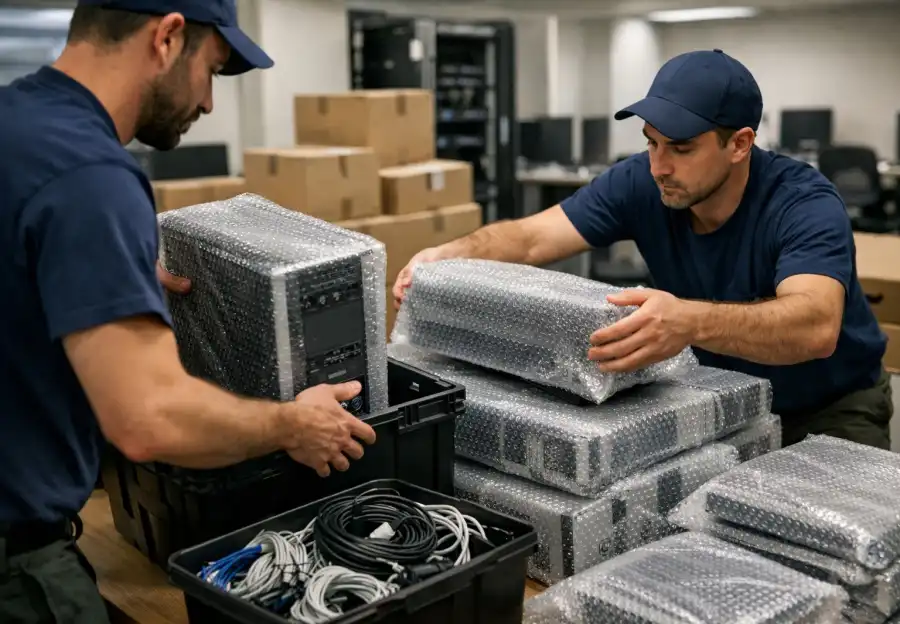
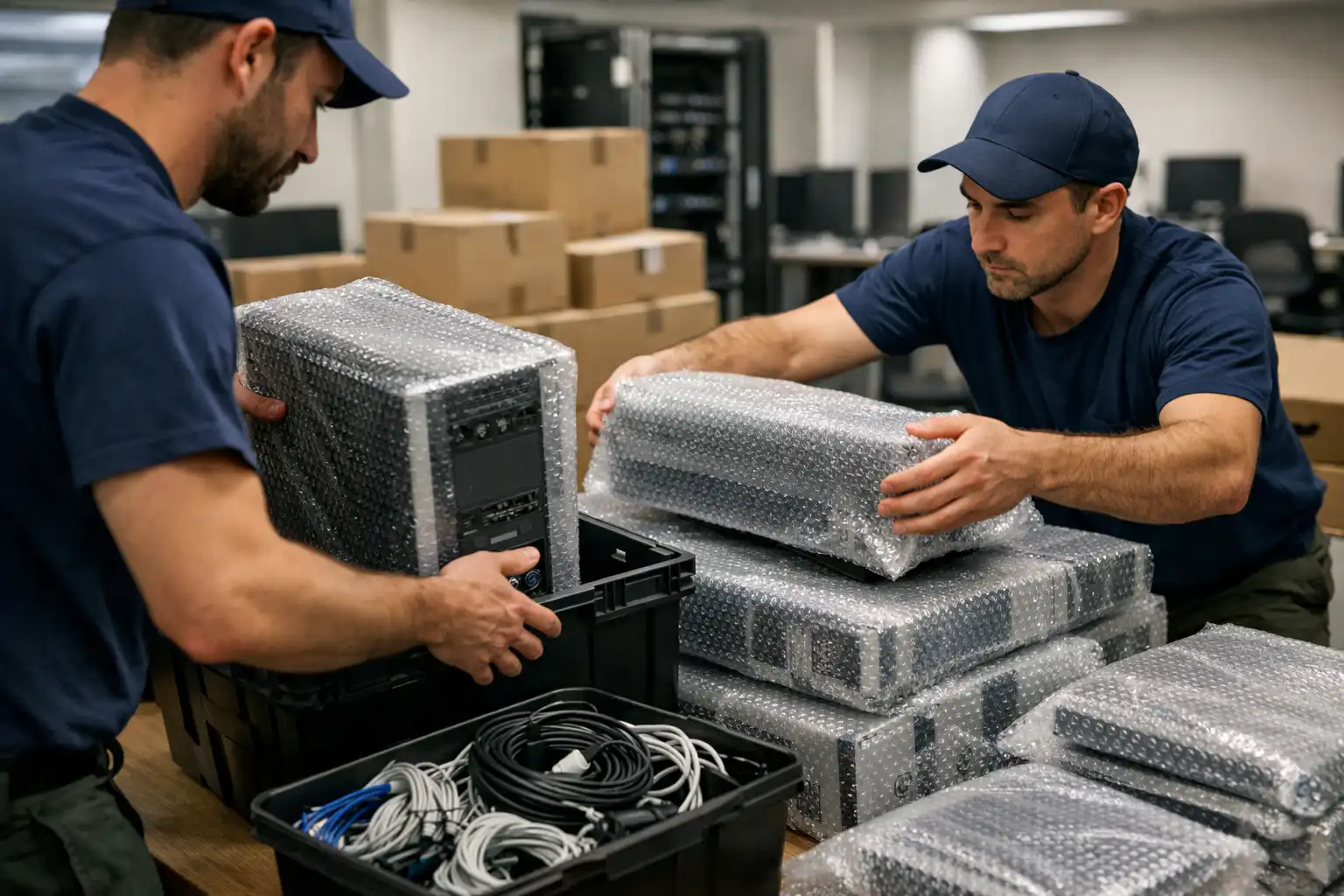
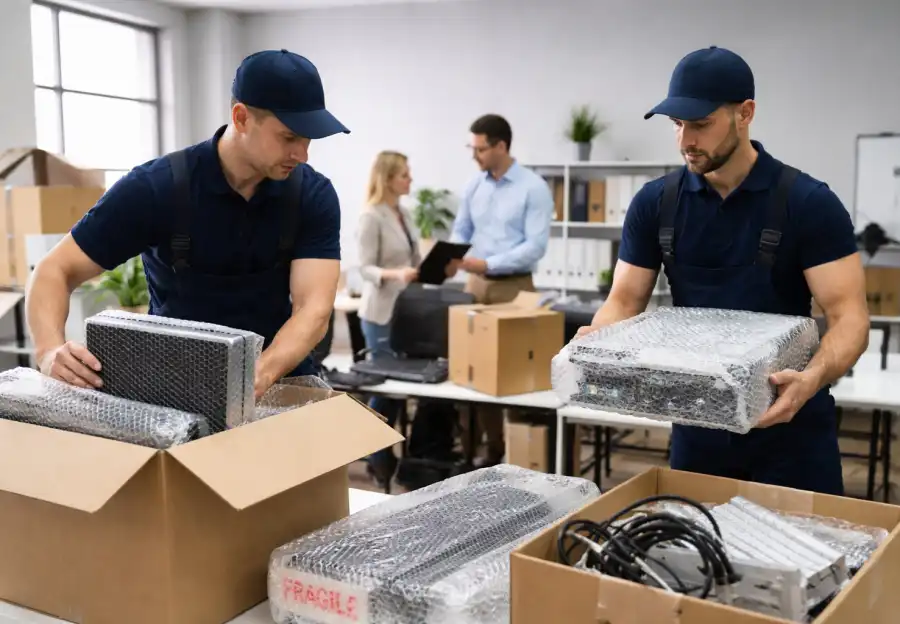
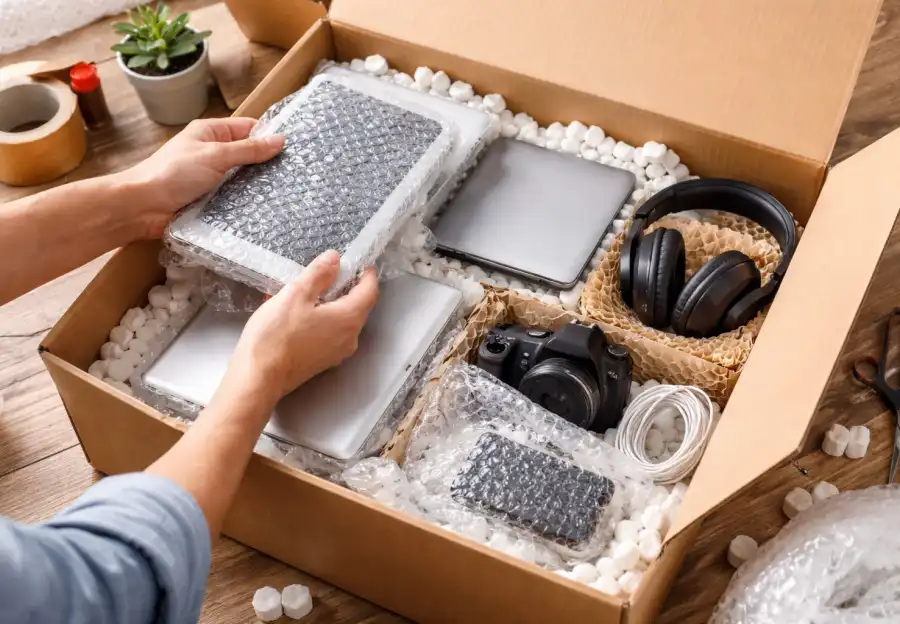
Small kitchen appliances need careful handling due to their weight and delicate components. Items like blenders, coffee makers, mixers, and toasters should be cleaned, dried, and disassembled if possible. Wrapping cords separately, securing removable parts, and padding appliances with bubble wrap or towels helps prevent damage. Original boxes are ideal, but if unavailable, sturdy boxes with sufficient cushioning work well. Grouping similar appliances together saves space and simplifies organization during transport and unpacking.
Cookware such as pots, pans, baking sheets, and mixing bowls can be packed efficiently by nesting similar sizes together. Placing packing paper, towels, or cloth between items prevents scratches and dents. Handles and sharp edges should be wrapped for added protection. Lids can be packed separately or secured to pots with tape or elastic bands. Because cookware is often heavy, it should always be packed in smaller boxes to avoid excessive weight, making boxes easier and safer to lift and stack.
Utensils, cutlery, and small kitchen tools require thoughtful organization to avoid loss or damage. Grouping similar items together in small boxes, pouches, or wrapped bundles keeps them contained. An effective method is wrapping entire utensil trays or drawers with plastic wrap, preserving their organization while protecting items. Spice jars, measuring cups, and baking tools should be packed upright in padded boxes to prevent shifting. Labeling these boxes clearly saves time when setting up your new kitchen.
Pantry items and non-perishables also need careful packing. Canned goods, jars, and dry foods are heavy and should be packed in small to medium boxes. Lids should be taped or containers sealed to prevent spills. Grouping similar items, such as baking supplies, snacks, or canned foods, makes unpacking faster and more organized. This is also an excellent opportunity to check expiration dates and discard expired items before the move, reducing unnecessary transport.
Clear labeling and consistent organization throughout the process are essential for efficiency. Each box should indicate its contents, destination room, and any special handling instructions. Color-coded labels, numbered boxes, or simple inventories help track items and prioritize essentials. This system ensures that boxes are placed in the correct area of your new home and that fragile items receive appropriate care, making the move safer and less stressful.
Ultimately, packing a kitchen efficiently requires a systematic approach from start to finish. Decluttering, gathering proper materials, protecting fragile items, managing weight, organizing small tools, securing pantry goods, and labeling clearly all contribute to a smoother relocation. With careful planning and attention to detail, your kitchen items will arrive safely, unpacking will be straightforward, and you can settle into your new home quickly with everything organized and exactly where it belongs.