
February 17, 2026
Checklist for a Successful Corporate Move
Successfully executing a corporate move requires meticulous planning, careful organization, and precise coordination. Unlike residential relocations, corporate moves involve multiple interconnected components, including employees, office furniture, equipment, IT infrastructure, client communications, and uninterrupted business operations. Without a structured approach, even small oversights can lead to downtime, financial losses, and employee frustration. Creating a comprehensive corporate moving checklist ensures that every phase of the relocation is managed efficiently, risks are minimized, and the transition to the new office is as smooth and professional as possible.
The first step in an effective corporate moving checklist is conducting a thorough assessment of the current office space, resources, and workflows. This assessment involves understanding the size of the facility, the number and type of assets being moved, departmental requirements, and operational priorities. Identifying what needs to be relocated, replaced, upgraded, donated, or discarded helps reduce clutter, streamline packing, and lower transportation costs. This evaluation also highlights potential challenges, such as fragile equipment, confidential records, or specialized workstations, allowing the company to plan appropriate handling and protection strategies in advance.
Developing a detailed moving plan and timeline is essential for maintaining control throughout the relocation process. A phased plan should outline key milestones, including packing schedules, furniture disassembly, IT shutdowns, transportation dates, and setup deadlines for each department. Assigning a dedicated move coordinator or project manager centralizes communication and accountability, ensuring that questions are answered quickly and issues are resolved efficiently. A comprehensive checklist covering utilities, lease transitions, address updates, insurance, and compliance requirements helps prevent overlooked tasks that could disrupt operations.
Budgeting and resource management are critical components of a successful corporate move. Relocation costs can add up quickly, including expenses for professional movers, packing materials, IT specialists, transportation, insurance, and temporary storage. Creating a realistic budget with detailed cost estimates provides financial control and prevents overspending. Exploring cost-saving measures, such as reusing packing supplies, donating unused furniture, or negotiating bundled services with moving companies, can significantly reduce expenses. Maintaining a contingency fund ensures that unexpected costs do not derail the move or delay operations.
Employee communication and engagement play a vital role in corporate relocation success. Employees need clear, consistent information about the move timeline, expectations, and individual responsibilities. Regular updates through meetings, emails, or shared digital platforms reduce uncertainty and stress. Providing clear instructions for packing personal belongings, labeling equipment, and preparing workstations ensures consistency and efficiency. Involving department heads in planning allows operational needs to be prioritized, while notifying clients, vendors, and partners about the relocation maintains transparency and trust.
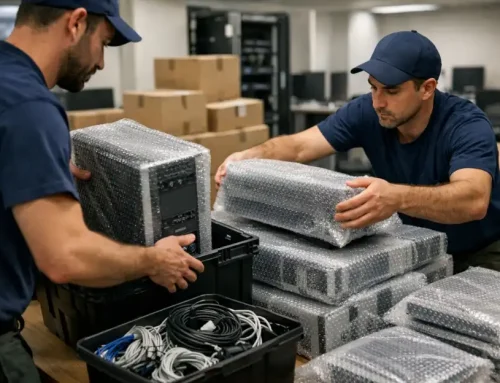
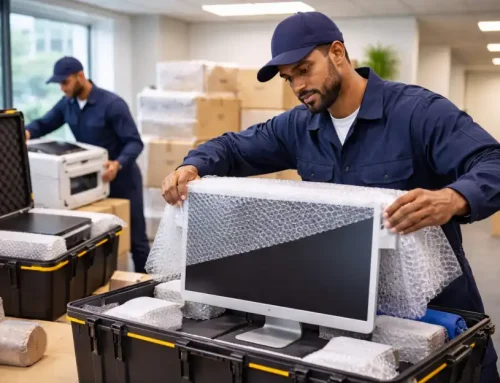
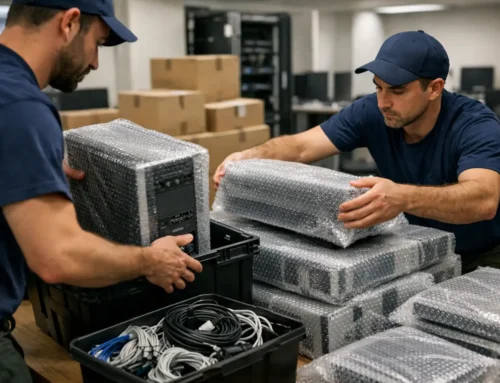
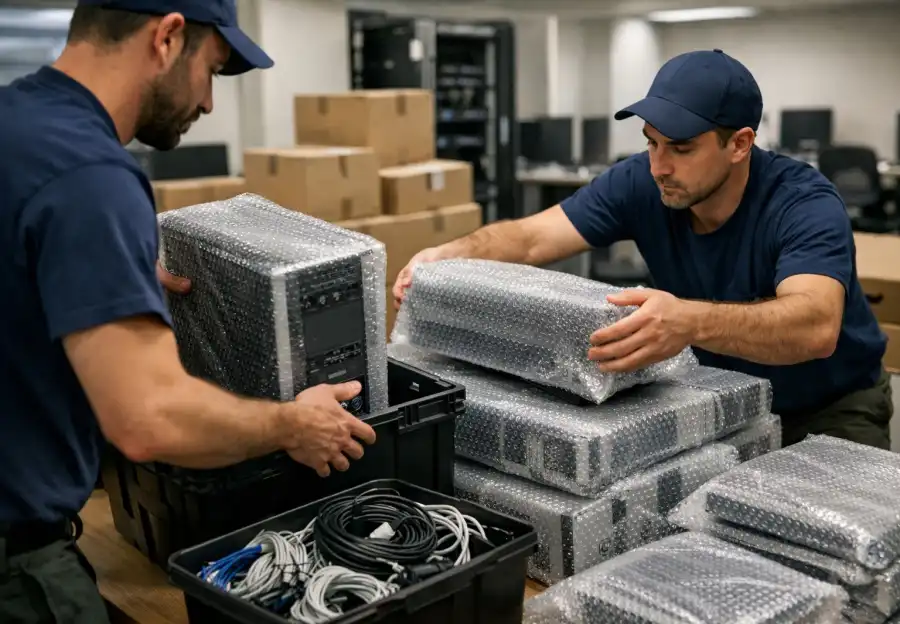
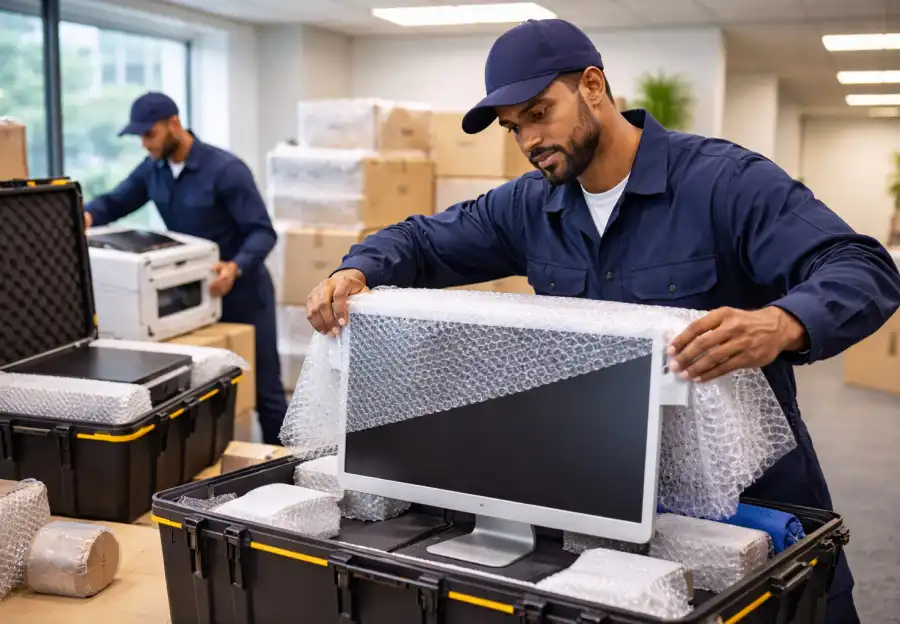
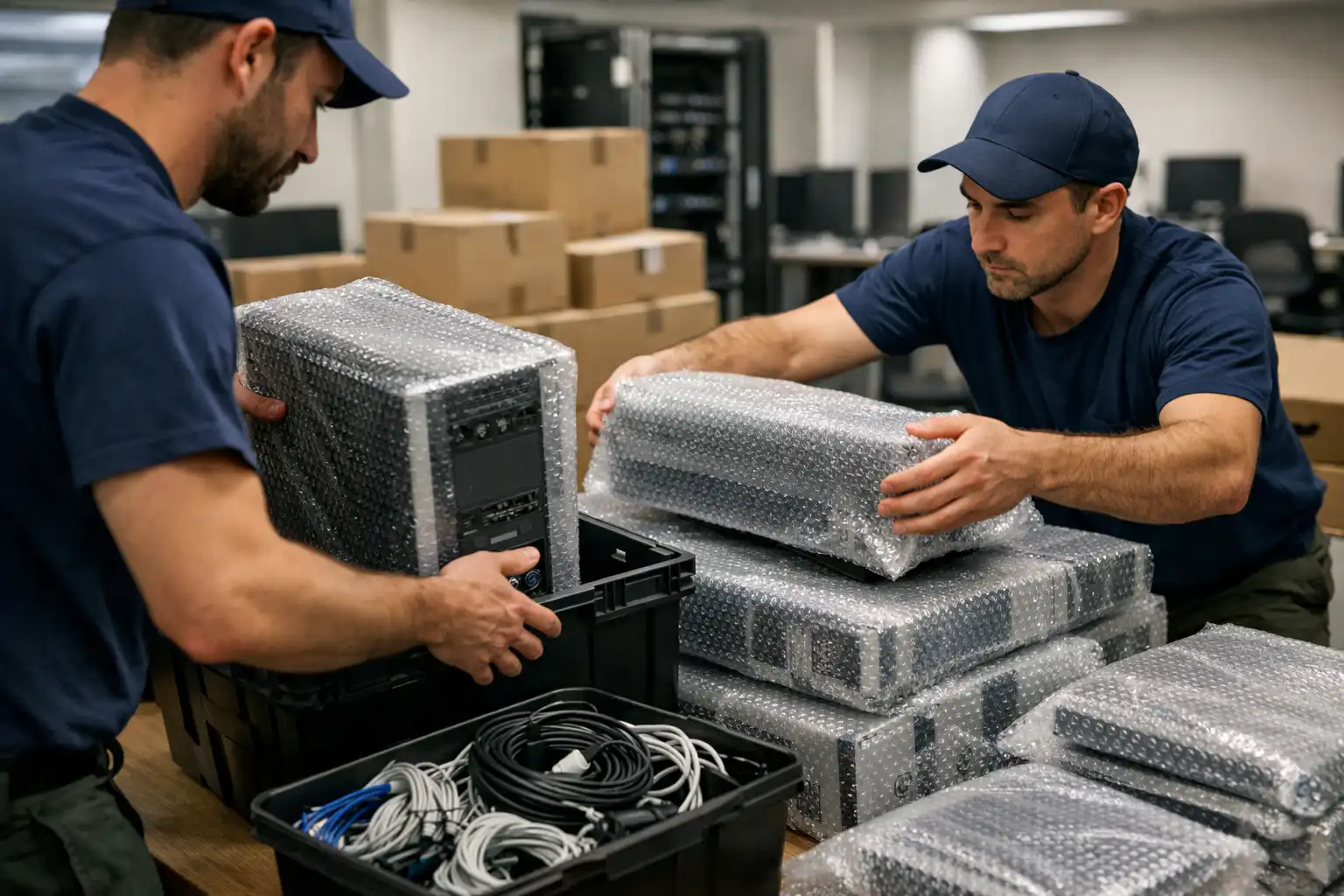
Technology and IT infrastructure require special attention, as downtime can significantly impact productivity and customer service. Planning the shutdown, secure transport, and reinstallation of servers, computers, phones, and network systems is essential. All data should be backed up before the move to prevent loss, and sensitive equipment should be packed securely. Working with IT professionals or movers experienced in technology relocation minimizes risks and accelerates setup. Proper labeling of cables, documenting network configurations, and organizing hardware ensures that systems can be restored quickly in the new office.
Organized packing and labeling strategies are essential to reducing errors and preventing damage. Using standardized boxes and clear labels categorized by department, priority, and destination room enables efficient handling and unpacking. Separating essential operational items from non-critical supplies ensures that business functions can resume immediately upon arrival. Clear instructions for handling fragile, heavy, or confidential items protect assets and reduce the risk of accidents. An organized system saves time, improves accountability, and simplifies post-move setup.
Logistical coordination is another critical aspect of a corporate move. Transportation schedules, building access, elevators, loading docks, parking, and security requirements must all be planned in advance. Coordinating with professional movers, building management, and internal teams ensures that the move proceeds without delays. Contingency planning for traffic issues, equipment failures, or weather disruptions helps mitigate potential setbacks. Planning the layout of the new office ahead of time allows employees to move directly into functional workspaces, minimizing downtime and confusion.
Once the move is complete, efficient setup of the new office is equally important. Arranging furniture, technology, and supplies according to pre-planned layouts ensures that employees can resume work quickly and comfortably. Verifying that all equipment arrived safely and functions properly allows for immediate resolution of any issues. Gathering feedback from employees and documenting lessons learned provides valuable insights for future relocations and continuous improvement.
In conclusion, a successful corporate move depends on early assessment, detailed planning, careful budgeting, employee engagement, IT coordination, organized packing, logistical oversight, and efficient post-move setup. By following a comprehensive corporate moving checklist, businesses can minimize disruption, protect assets, support employees, and maintain client confidence. With careful preparation and attention to detail, even complex corporate relocations can be transformed into structured, efficient, and positive experiences that support long-term productivity and growth in the new workspace.