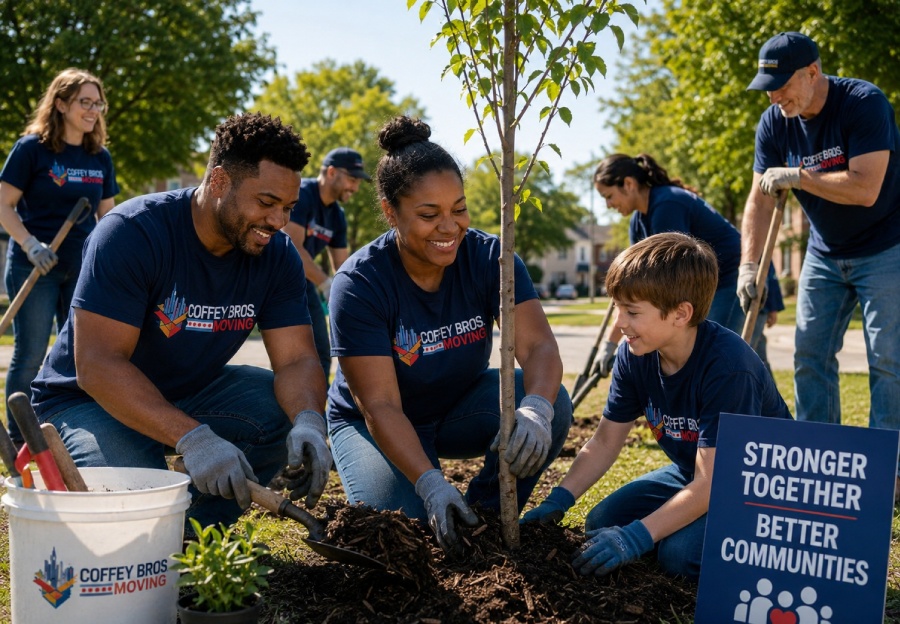
Why Coffey Bros Moving Believes Giving Back Is Good for Everyone
In business, success is often measured by numbers. Companies track revenue, customer growth, market share, and profitability. While those metrics certainly matter, some business owners believe success carries a broader responsibility. At Coffey Bros Moving, one of Chicago’s most established moving companies, community involvement is viewed not as an obligation but as an extension of the company’s values.
For owner Ken Coffey, giving back is not separate from running a successful business. It is part of what defines success in the first place.
“When you’ve been fortunate enough to build a business in a city like Chicago, you have to recognize that your success didn’t happen in isolation,” Coffey says. “Our customers, employees, neighborhoods, and local organizations all contribute to that success. Supporting those same communities is simply the right thing to do.”
That perspective reflects a growing understanding among business leaders that healthy communities and healthy businesses often go hand in hand. Companies do not operate independently from the cities around them. They depend on strong neighborhoods, stable families, quality schools, and engaged residents. When those foundations are strengthened, everyone benefits.
Research from the National Center for Charitable Statistics shows that nonprofit organizations contribute hundreds of billions of dollars annually to the U.S. economy while providing essential services that government agencies and private businesses often cannot address alone. Local charities frequently serve as the backbone of community support systems, helping families, students, seniors, and underserved populations access resources that improve quality of life.
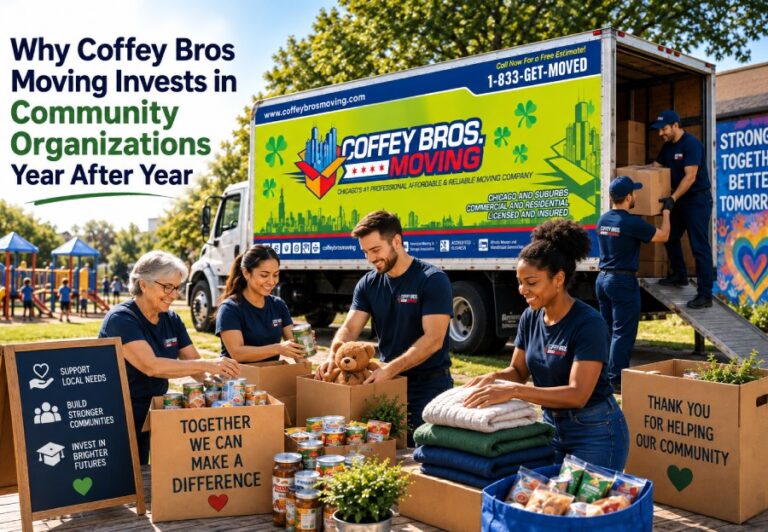
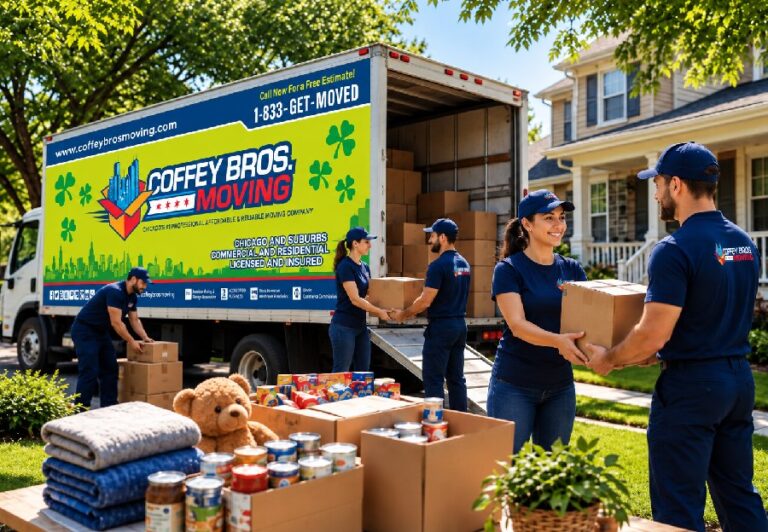
Coffey Bros Moving has supported a variety of charitable organizations throughout the Chicago area over the years, focusing on causes that create meaningful local impact. The company’s involvement reflects a belief that community support should be personal and connected to the places where employees and customers live.
“We try to focus on organizations that are making a direct difference in people’s lives,” Coffey explains. “Whether it’s helping young people develop leadership skills or supporting programs that strengthen neighborhoods, we want our contributions to have a real and lasting effect.”
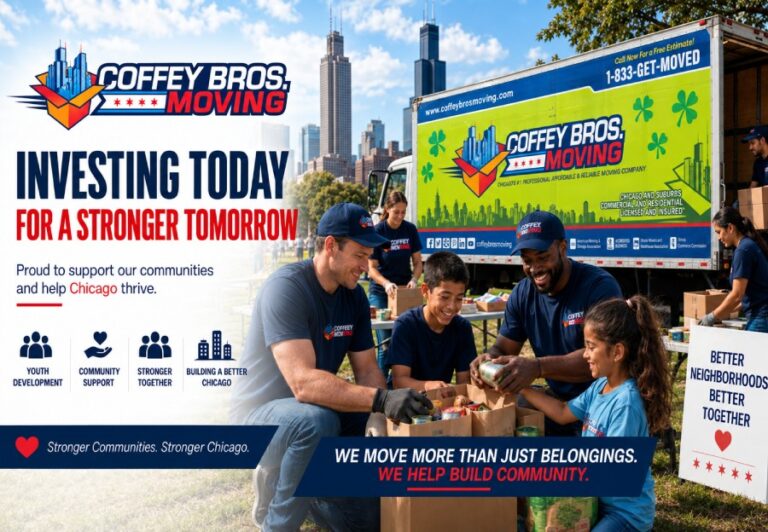
One area that receives particular attention is youth development. Organizations that provide mentoring, education, and leadership opportunities often create benefits that extend far beyond the individuals directly involved. According to data from MENTOR, young people who participate in mentoring programs are significantly more likely to pursue leadership roles and community involvement as adults. Investments in youth today often become investments in stronger communities tomorrow.
The benefits of charitable involvement are not limited to nonprofit organizations. Businesses themselves frequently discover that community engagement strengthens company culture. Employees increasingly want to work for organizations that demonstrate values beyond profitability. A workplace that encourages civic involvement can create a stronger sense of purpose among team members and foster deeper connections between colleagues.
Coffey believes that effect is visible within his own company.
“When employees see the company supporting causes they care about, it creates a sense of pride,” he says. “People want to know they’re part of something larger than a transaction. They want to feel connected to the community they’re serving.”
That connection can also strengthen relationships with customers. Modern consumers often pay attention to how companies contribute beyond the services they provide. A study conducted by Porter Novelli found that consumers are more likely to trust and support businesses that actively engage in solving community challenges. While charitable work should never be performed solely for public recognition, community involvement often reinforces the trust that successful businesses spend years building.
In Chicago, where neighborhoods often have strong identities and deep local roots, that trust carries particular importance. Residents tend to support businesses that demonstrate a genuine commitment to the city rather than simply operating within it.
For Coffey, the philosophy behind giving back remains remarkably straightforward.
“I don’t think community support should be viewed as a marketing strategy,” he says. “If you’re fortunate enough to succeed, you should look for ways to help others succeed too. That’s good for families, good for neighborhoods, and ultimately good for the city as a whole.”
The idea that giving back benefits everyone may sound simple, but its impact can be substantial. Strong nonprofits help communities thrive. Strong communities create opportunities for businesses and residents alike. When local companies invest their time, resources, and energy into causes that matter, they help build a cycle of growth that extends far beyond their own balance sheets.
For Coffey Bros Moving, that cycle represents a core belief about what business success should accomplish. Moving families and businesses may be the company’s profession, but helping strengthen the communities they call home is part of its purpose.